


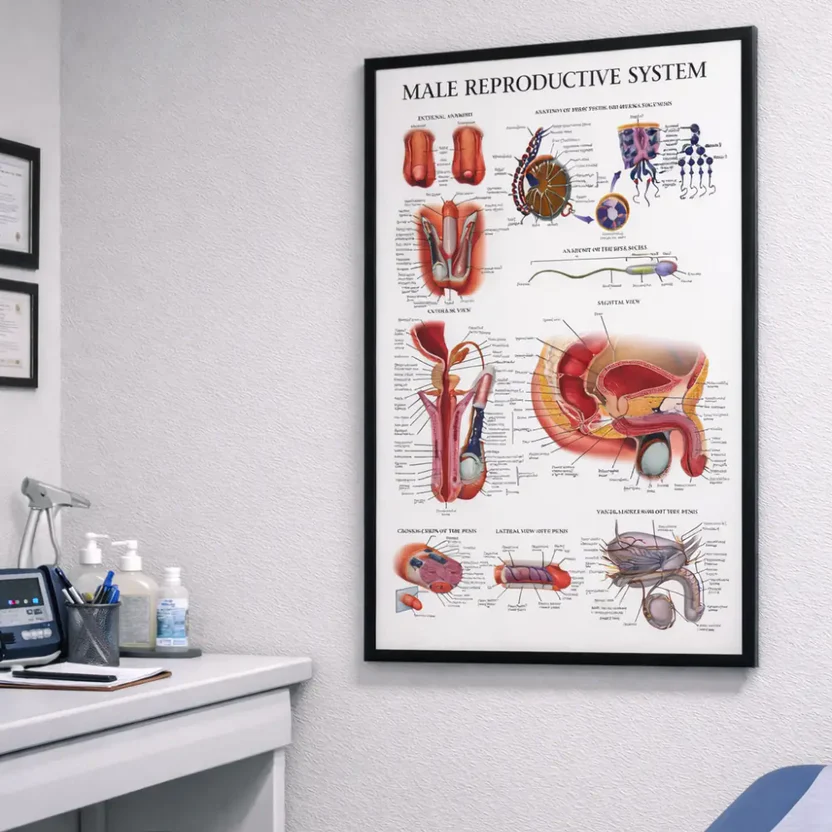
Learning about the human body is not always easy, honestly. Books explain things, but sometimes they just stay confusing in the head. That’s where tools like anatomy models come in and make things feel a bit more real. When someone actually sees how organs sit or how bones connect, it clicks faster. It’s not about being perfect, just about making learning less heavy and more clear in a simple way.
Real Learning with Visual Tools
Many students struggle when everything is only theory-based. Diagrams help, but they still feel flat sometimes. A physical model, though, changes that experience. You can rotate it, touch it and observe angles and positions. That small difference matters more than people think.
In classrooms, teachers often notice better focus when models are used. Students ask more questions. They engage more naturally. It doesn’t feel like forced learning anymore.
Why Models Feel More Practical
Reading about muscles or organs is one thing. Actually, seeing them in a structured form feels different. The brain understands shapes faster than text; that’s just how it works.
A good anatomy model helps in:
-
Understanding organ placement clearly
-
Learning faster without unquestioningly memorizing
-
Improving long-term memory retention
-
Making teaching sessions more interactive
It’s not about replacing books. It’s more like supporting them in a better way.
Helpful For Different Users
These tools are not just for medical students. That’s a common misunderstanding. Even beginners, school learners, and trainers use them.
Some common users include:
-
Medical and nursing students
-
Biology teachers in schools
-
Training institutes and labs
-
Even fitness trainers learn body structure basics
The flexibility of use makes these models useful in many situations. They are not limited to one field.
Small Details Make a Big Difference
One thing people often ignore is the quality of detail. A well-made model shows fine structure clearly. That matters a lot during learning.
For example, seeing nerve paths or muscle layers properly helps avoid confusion later. Poor-quality visuals create a wrong understanding, which becomes hard to fix later.
So, choosing the right model matters more than just buying any option.
Making Learning Less Stressful
Many students feel pressure when studying anatomy. It feels like too much information at once. Using visual tools reduces that stress a little.
Instead of memorizing pages, learners start understanding concepts step by step. That change in approach builds confidence slowly. Learning becomes less about fear and more about curiosity.
It’s not perfect, but it helps practically.
Conclusion
Learning about the human body does not have to feel overwhelming all the time. Tools like anatomy models quietly improve how people understand complex structures without forcing too much effort. When learning feels natural, results improve without extra pressure. In the end, combining simple study methods with visual tools can make a big difference in how knowledge actually stays. Taking small steps like this can improve learning quality over time and help students or professionals feel more confident in what they study.